Benchmark investors face growth gap as firms delay listing
Reading Time: 2minutes
Financial Newswire – Binaya Dahal
Investors relying on traditional market benchmarks risk missing many of the structural growth themes expected to drive the global economy over the coming decade, as potential market leaders stay private for longer, according to Ziller Funds Management.
Joe Ziller, founder and chief investment officer of the Sydney-based asset manager, said the advance of artificial intelligence (AI), private capital and founder-led innovation were reshaping global equity markets and changing where future growth opportunities were being created.
“Investors have traditionally looked to listed markets to identify tomorrow’s winners,” Ziller said.
“Increasingly, many of tomorrow’s most important businesses are reaching enormous scale before they ever list. That has significant implications for how investors think about long-term portfolio construction.”
Speaking at an investor briefing this week, Ziller warned that the shift could leave benchmark-focused investors underexposed to some of the fastest-growing parts of the global economy.
He said sectors including AI, digital infrastructure, fintech, cybersecurity and space technology will likely account for about 56% of global GDP growth over the next decade, despite representing only around 32% of today’s equity indices.
“The economics of company building are changing,” Ziller said.
“For decades, founders were constrained by access to capital, the need for significant physical infrastructure and the challenge of scaling large workforces. Those barriers are falling simultaneously.”
He said AI was enabling businesses to generate significantly greater output with fewer employees, accelerating the pace at which companies can scale.
Ziller noted that AI-native companies were drawing around US$3.5 million in revenue per employee, approximately six times that of traditional software businesses.
“The result is that exceptional founders can build globally significant businesses faster than at any point in history,” he said.
“Taking an active view in this share of the market has never been more important.”
Licensed by Copyright Agency. You must not copy this work without permission.
SaaSpocalypse was a buying opportunity. This manager took it
Reading Time: 6minutes
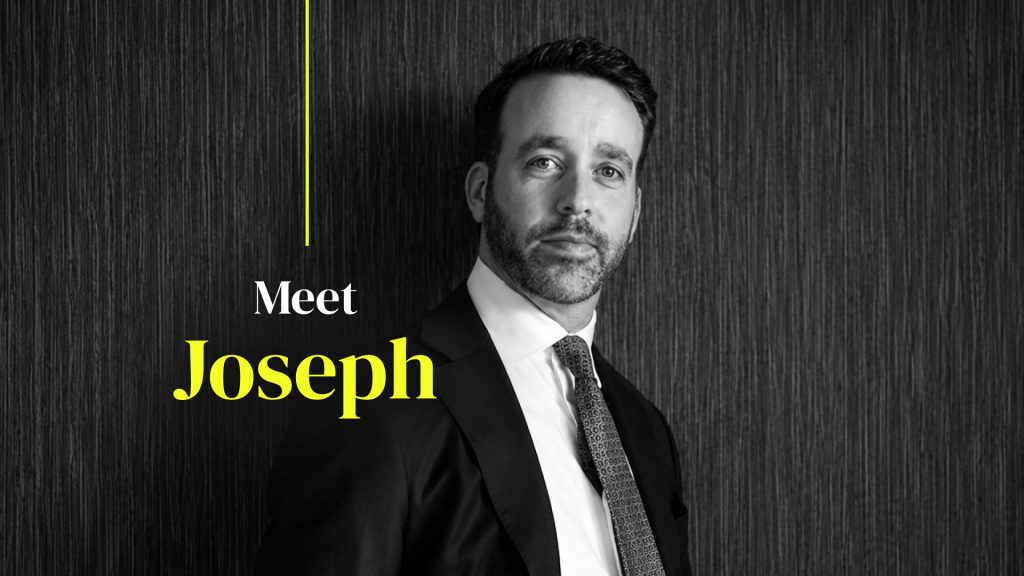
Joseph Ziller explains why he bought founder-led SaaSpocalypse stocks on the way down and the reason a defence IPO is on his watchlist.
When tech stocks took a beating earlier this year over fears of AI disruption, it created an opportunity for Joseph Ziller. As the founder and CIO of Ziller Funds Management, a lot of businesses that fall under his founder-led investment strategy tumbled to more attractive valuations.
Among the buys were names like Pro Medicus and Axon Enterprise, which have both experienced strong recoveries after deep drops. It’s a strong argument for Ziller’s founder focus, where he goes beyond the financials and looks at the person running the show.
That’s also the rationale behind his latest watchlist pick. It’s not a company that investors can find on the public markets yet, but with chatter about an IPO on the horizon, Ziller is keeping an eye on defence products firm Anduril.
In this Q&A, Ziller breaks down the case for the SaaSpocalypse stocks that are making a recovery, why SpaceX’s post-IPO sell-off is this week’s win, and shares the piece of advice he gives to every new investor.
Ziller Funds Management’s Joseph Ziller
What’s your most recent investment and why?
Pro Medicus (ASX: PME) — our first Australian holding, purchased in February. We’d tracked it since the Fund’s inception in 2022: it passed our Founder and Business filters from day one, but the valuation only recently became attractive.
Founder-CEO Dr Sam Hupert is a rare combination — the clinical insight of a practising physician with the relentless execution of a tech entrepreneur. Visage 7, the company’s imaging platform, is the technology benchmark in radiology software: its streaming architecture opens even the largest studies in under a second, which is why it has become the platform of choice for America’s top academic health systems.
The AI-driven derating of software stocks over the past year — the so-called SaaSpocalypse — offered us a compelling entry point in February. Over time, we believe it will become clearer that Pro Medicus is a beneficiary of AI as imaging volumes grow and AI tools get deployed through exactly the kind of platform Visage has built.
Which investment did you add to your watchlist this week?
We run a tight global focus list of 80 structural winners led by exceptional founders. No changes this week — but alongside it we track the IPO pipeline for names in our hitting zone, and we added one: Anduril (Defence Tech), founded by Palmer Luckey.
As a teenager, Luckey amassed the world’s largest private collection of VR headsets and built his own prototypes in his parents’ garage, funding the work by repairing phones and cleaning boats. When his future co-founders first saw the Oculus Rift, it was a tape-covered brick buried under cables. Within two years, Facebook bought Oculus for US$2 billion.
Anduril is the second act: a US defence company built to mass-produce low-cost autonomous systems. It funds development with its own capital and sells finished products at fixed prices — the inverse of the primes’ cost-plus model. Cheap, scalable autonomy is the thesis here.
“We’re not a defence contractor — we’re a defence products company. When we fail to make a product that works, we don’t get paid… Imagine if the iPhone had been built on a cost-plus contract — it wouldn’t have worked.” — Palmer Luckey
What is the most recent investment you have trimmed or sold and what drove this decision?
Axon Enterprise (NASDAQ: AXON). We added through the SaaSpocalypse and the stock rallied 80% from its April lows to its early-July peak. We trimmed into that strength as valuation became less compelling.
Since listing in 2001, Axon has compounded at more than 30% a year — a total return of ~100,000%. Founder Rick Smith started the business with a personal mission — to make the bullet obsolete — after two friends were killed in a shooting. Thirty-three years on, he still runs it, still owns it, and is still obsessed with it.
Tasers, body cameras, digital evidence — Axon is the operating system of American policing. At the centre sits Axon Evidence: 400+ petabytes of mission-critical data across more than 18,000 agencies. Churn is close to zero as switching providers risks compromising evidence in live prosecutions.
The SaaS sell-off was an opportunity to double down on a rare compounder at a rare price — mispriced on the same fear that hit Pro Medicus: that AI kills the software incumbent. Both own the layer AI must ship through to reach the end user.
For Axon that’s the point of capture — cameras and Tasers at the edge — and the evidence data behind it, so AI in policing arrives through Axon as revenue, not against it as competition. Quarterly results are proving this out with AI revenue growing roughly 700% year-on-year last quarter.
What’s your favourite chart or data point from this week?
One I was thinking about a bit this week.. a chart posted by Brian Armstrong, Founder and CEO of Coinbase (portfolio holding) on AI token spend. As tech-forward companies lean into the power of AI, the explosion in token spend is becoming a key financial bottleneck. Brian detailed how Coinbase has managed to halve their token costs while increasing their token usage.
One of the interesting implications for us, as holders of Palantir as well, is that Palantir’s Ontology — its pre-built ‘dictionary’ of every enterprise’s data, workflows, and assets — is exactly the infrastructure that solves this problem at scale for enterprises: rather than each AI agent burning expensive tokens reconstructing context from scratch, Palantir as orchestrator hands it a precise, pre-labelled briefing, meaning companies running Palantir’s platform can grow their AI usage without a proportional blowout in compute costs.
Source: Coinbase
What was your weekly high – a standout market moment or highlight?
SpaceX (NYSE: SPCX) sold-off back to IPO levels. We are keen buyers of SpaceX at the right price and are excited about the growing opportunity to own this stock. Low-cost reliable launch is in scarce supply with SpaceX having a near monopoly here.
By owning this short supply, SpaceX has one of the few sets of keys unlocking the application layer. For example, SpaceX’s Communication division grew revenue 50% last year at high 30s operating margin with the division now representing ~60% of SpaceX’s total revenue.
What was your weekly low – a market disappointment or challenge from the week?
Memory stocks ripping early in the week. We are believers in the AI infrastructure rollout and are positioned accordingly, however, we have aligned with businesses with higher through-the-cycle returns on capital.
What first drew you to markets or this sector and what continues to keep you inspired today?
My mum was a counsellor, and my dad was a banker. What drew me to markets and one aspect that I still love today is learning about the people behind the numbers. The brilliant leaders. We’ve found there to be asymmetric upside here, with the best leaders often deeply undervalued in the market. This is the core thesis of our Fund.
What’s one piece of advice you’d give to new investors?
There are experts who have a track record of being right and experts who have a track record of eloquent reasoning. When they disagree, which can be often, follow the one with the track-record of being right.
How do you unwind when you’re not thinking about the market?
Nature walks with my wife.
Joseph Ziller and his wife.
Rapid fire!
What is your favourite investing book?
The Outsiders — William Thorndike.
What is your favourite investing or finance/markets related podcast?
How I Built This with Guy Raz.
What’s the first thing you read each morning?
My top follows for each portfolio holding on X.
What is your favourite restaurant?
Bessie’s & Alma’s.
What’s something people are surprised to learn about you?
Licensed by Copyright Agency. You must not copy this work without permission.
Ziller doubles down on tech bets and launches ETF on the ASX
Reading Time: 3minutes
The AFR – Alex Gluyas – Markets reporter
It’s been a tough few months for Joseph Ziller’s Global Fund.
His portfolio of high-growth companies run by their founders has been on the front line of a violent sell-off in software companies amid fears that artificial intelligence will replicate their services at a lower cost.
The fund sank 11.5 per cent in January alone after its outsized positions in former Wall Street darlings Figma and Palantir were swept up in the carnage. The portfolio is now down 21.9 per cent over the past three months.
Ziller is seeing a range of attractive opportunities amid the pullback in growth stocks. Louise Kennerley
But Ziller has brushed off the hammering of the tech sector and launched his equity strategy on the ASX on Monday as an exchange-traded fund. He believes the correction in the fund’s holdings allows investors to snap up the ETF at an attractive valuation.
“The relative pullback of software stocks on the S&P 500 compared to the whole S&P 500 on a three-month rolling basis has been as aggressive as the peak of the dotcom bust – it’s been very sharp,” he said.
“These times when there is an indiscriminate rotation out of a sector and correlations rise which causes everything to fall, is when the best bargains can be found.”
Ziller is in the early stages of expanding his funds management business which last year caught the eye of high-profile investment house Perennial Partners, which took a 50 per cent stake.
His global strategy, which manages $11 million, has returned 25.1 per cent a year since its 2022 inception, despite the more recent volatility.
Among those has been Palantir, which develops analytics platforms used by governments and businesses to make sense of vast, complex datasets. The stock has dived 20 per cent this year amid scepticism about its lofty valuation.
Ziller has also bought more shares in Figma, a design tool that lets teams collaborate in real time on digital products such as websites and apps. The fund has held Figma since it floated on the New York Stock Exchange in July, surging 250 per cent in its debut before crashing 81 per cent from its peak.
“Figma has been sold off as a risky software as a service (SaaS) business, but we actually see them as being a beneficiary from AI,” Ziller said.
The market’s anxiety kicked up a gear after AI giant Anthropic released the latest version of a legal plugin that operates within the platform Claude Cowork earlier this month that raised concerns about market disruption.
Ziller said an “investment fog” had settled over the sharemarket as investors struggled to forecast returns for SaaS companies that they think will be disrupted by AI. Price-to-earnings multiples have fallen despite short-term earnings expectations being unchanged.
The fund manager added that the still-solid profit outlook gave him confidence to stick with the portfolio, which also includes electric vehicle maker Tesla, chip giant Nvidia, crypto exchange Coinbase and rocket company Rocket Lab.
“We track our internal return for each stock in the portfolio over the next five years and then aggregate that at the portfolio level, and our five-year return estimate is at the top of its range since the fund’s inception,” he said.
Ziller joins a growing list of high-profile money managers including Jun Bei Liu’s Ten Cap, Doug Tynan’s GCQ Funds and David Allen’s Plato Global Alpha Fund to list their funds on the ASX as an actively managed ETF.
“The ETF improves accessibility, liquidity and operational efficiency,” Ziller said. “It allows advisers to implement and adjust positions intraday, integrate the strategy seamlessly into model portfolios and access daily transparency.”
Licensed by Copyright Agency. You must not copy this work without permission.
Fund manager Joseph Ziller reveals stocks behind his 39pc returns
Reading Time: 4minutes
The Australian – David Rogers
Global markets are on edge before Nvidia’s quarterly results and US jobs data. And doubts are mounting about whether the artificial intelligence spending boom will end in tears.
Yet Joseph Ziller, founder of Ziller Funds Management, remains upbeat. His fund has delivered a 39 per cent annual return since launching in November 2022 by backing an unfashionable investment thesis: that companies run by their founders consistently outperform the market.
“We’re a growth fund, and so we very much take a long-term view,” says the Australian-based Ziller.
“Clients that allocate with us think ‘I want attractive long-term returns, but for this share of the portfolio I’m giving you, I’m willing to look through some volatility’.”
Ziller Funds Mangement’s Joseph Ziller. Picture: Scott Curtis
The Ziller Global Fund holds a concentrated portfolio of just 15 stocks, including two of the so-called Magnificent Seven – Nvidia and Tesla. But Ziller is quick to point out that 84 per cent of his portfolio sits outside that elite group of mega-cap technology stocks.
What distinguishes his approach is a rigorous assessment of founders.
The median chief executive tenure globally is just 4.8 years.
The median founder-CEO tenure in Ziller’s portfolio is 19 years – almost four times longer.
“These founders have been running the same company through multiple cycles,” Ziller says.
“We have this long track record to assess them and build confidence.”
His team ranks founders across two dimensions: output and quality. Think of it like a plumbing system. Output measures how much water flows. Quality measures the integrity of the system.
“You can have high output, but if you’ve got low quality, that’s where you get the big financial disasters – impressive in their own right, but not what we want from an investment point of view,” Ziller says.
The quality assessment focuses on character and how founders operate under pressure.
“I would rather have low output and high integrity if I couldn’t have both,” Ziller adds.
“There’s no use having high output if the system breaks.”
This philosophy has been tested before. In late 2022, Nvidia fell around 60 per cent on chip oversupply concerns. Palantir, another Ziller holding, dropped 75 per cent on fears it was becoming a consulting business rather than a software monopoly. Both stocks are up 10 to 20 times from those lows.
The research backing founder-led investing is compelling. Ziller’s analysis of S&P 500 companies shows founder-led stocks have outperformed other stocks by almost 10 times since 1994.
Academic studies consistently show founder-led companies generate annual excess returns of between 2 and 12 per cent.
On the current AI anxiety, Ziller sees both sides.
“AI is one of the most transformative technologies we’ll see over the next few decades,” he says.
“But what we’re seeing at the moment is very large capital expenditure spend, and only a small subset of that creating real value from AI at the moment. That’s the issue.”
He sees much of today’s AI spending generating no real return because execution quality is low.
But pockets exist where AI creates enormous value.
Database processing is shifting from traditional chips to Nvidia’s graphics processing units because they’re simply faster and cheaper. Social media recommendation engines – think Facebook and TikTok – require massive computing power but generate real revenue.
Then there’s Palantir, a top holding that epitomises AI’s potential.
The company creates a “digital twin” – a unified view of a business by connecting disparate systems.
AI agents can then optimise processes that were previously impossible to improve.
“If you look at Palantir’s investor presentations, there’s endless examples,” Ziller says.
“This customer came to us, we did this for them, they saved this much, and we did it in 30 days whereas they used to do it in half a year.”
The so-called circularity of tech financing – where Microsoft and Nvidia committed up to US15bn ($A23bn) to Anthropic, which will likely spend much of it on Nvidia chips – doesn’t concern him.
“It’s not actually necessary for them to do for their business,” Ziller argues. “The reason they’re doing it mainly is just because Nvidia is throwing out so much cash at the moment that they can’t spend it.
It’s a capital allocation decision which makes sense at the current time.
His fund added cryptocurrency exchange Coinbase earlier this year after regulatory clarity emerged.
But this isn’t a punt on bitcoin prices.
“Coinbase is actually the leading US retail crypto broker and exchange,” Ziller says.
“We really liked that pairing of being the tech leader but also being the leader in trust, building in the most regulatory compliant way.”
He sees Coinbase shifting from lumpy transaction revenue to higher-quality services like custody, wallets and infrastructure provision. “They’re going to clip the ticket on this growing ecosystem. They’re becoming the Amazon of crypto in terms of the services they provide.”
With Nvidia’s results imminent, Ziller won’t trade around short-term noise.
“We tend not to trade too much in and out of results. If something happened in the results, and maybe we thought the results were strong and Nvidia fell, we might use it as an interesting opportunity to buy.”
It’s an approach grounded in long-term conviction rather than quarterly panic.
With markets now jittery, a focus on proven founders who’ve navigated through crises may prove its worth once again.
Licensed by Copyright Agency. You must not copy this work without permission.
Former Maple-Brown Abbott fundie makes first big hire under Perennial
Reading Time: 3minutes
AFR – Joanne Tran – Investment banking reporter
Former Maple-Brown Abbott stockpicker Joseph Ziller has made his first major hire at his two-year-old investment boutique, appointing Northcape Capital’s former analyst Wendy Herringer as he looks to build out the firm under Perennial Partners’ umbrella.
Herringer is due to start this month at Sydney-based Ziller Funds Management as a senior analyst after working as a portfolio manager and analyst on Northcape’s global equities strategy for three years. That followed more than decade working across Barings Asset Management and HSBC Asset Management.
Ziller Funds Management founder Joseph Ziller has made his first major hire since joining the Perennial stable. Louise Kennerley
“It’s our first major hire,” Ziller said. “When I first met Wendy what really stuck out to me, which is important for the firm, is she has a deep kind of passion for stocks and research and is also an extremely strong communicator.”
Ziller established the business in November 2022 after 11 years at Maple-Brown Abbott. His concentrated global equity fund now manages $10.5 million and has returned 39.6 per cent since inception, thanks to some timely bets in Figma, Palantir, Tesla and Coinbase.
Figma, led by tech whizz Daniel Field, became one of the hottest names on Wall Street after the stock rocketed 250 per cent when it debuted on the New York Stock Exchange at the end of July. Palantir, which develops powerful analytics platforms, has also enjoyed a strong run, with the shares up more than 140 per cent in 2025.
Wendy Herringer previously worked on Northcape’s global equities fund. Eamon Gallagher
“Our performance has been very strong,” Ziller said. “We’re ticking over to our three-year track record at the end of this month. That’s a big point in time when people start becoming really interested in the fund.”
Ziller’s strategy places unusual emphasis on the quality of company founders which he describes as the “most intensive part” of the investment process. He uses a ranking system to help him filter out the roughly 800 founder led companies that are publicly listed around the world.
“We’re not just backing fashionable stocks, we’re backing high-quality founders, their alignment, focus and character,” he said. “That’s where the bulk of our outperformance has come from.”
Licensed by Copyright Agency. You must not copy this work without permission.
Perennial buys stake in ex-Maple-Brown Abbott fundie’s shop
Reading Time: < 1minute
AFR – Street Talk – Sarah Thompson, Kanika Sood and Emma Rapaport
Perennial Partners has inked a partnership deal with former Maple-Brown Abbott stockpicker Joseph Ziller, taking a 50 per cent interest in his early-stage global equity funds management business and bringing it under its boutique model.
Ziller Funds Management founder and chief investment officer Joseph Ziller. Louie Douvis
Ziller Funds Management will join the Perennial stable alongside fixed income manager Daintree Capital and global small-mid cap equity manager Fairlight Asset Management.
Perennial also has a majority stake in Aussie equities impact manager Melior Investment Management and snapped up Australian Unity’s healthcare fund last year.
In return, Ziller will plug into Perennial’s strategic, operational and distribution capabilities, gaining access to its investor base of financial advisers, institutions and high-net worth individuals.
Ziller established the company in November 2022. He had spent 11 years at Maple-Brown Abbott before striking out on his own. Its $10.5 million concentrated global fund has returned 41.6 per cent over its three years, with stakes in IPO rocket Figma, Nasdaq-listed Palantir and small rockets designer Rocket Lab. Naturally, Perennial sees opportunities to grow the pie.
Licensed by Copyright Agency. You must not copy this work without permission.
How these founder-led stocks rocketed Ziller to a 50pc return
Reading Time: 5minutes
AFR – Alex Gluyas – Markets reporter
Since Joseph Ziller was a kid, he’s always been fascinated by brilliant business minds. So when the fund manager came across then 32-year-old tech whizz Dylan Field last year, he knew he was onto something special.
Field possessed all the signs of a genius, including mastering algebra by age six. At school, he preferred to spend time with a janitor who was also a maths savant – someone with exceptional mathematical ability – and at university, Field received the prestigious Thiel Fellowship – a $US100,000 ($154,873) grant for students willing to leave university to pursue bold ideas.
Ziller spent 11 years at Maple-Brown Abbott before starting his own firm in 2022. Louise Kennerley
Fast forward 13 years and Field’s design software company Figma has become the hottest name on Wall Street. The stock rocketed 250 per cent when it debuted on the New York Stock Exchange last week after completing a $US1.2 billion initial public offering.
Figma, which is a design tool that lets teams collaborate in real time on digital products such as websites and apps, is the most recent addition to Ziller Funds Management’s $10.4 million Founders Global Fund – a portfolio of 15 to 25 high-growth companies run by “exceptional founders”.
Ziller, who spent 11 years at Maple-Brown Abbott before going out on his own, was particularly impressed by Field’s ability to expand Figma’s customer base beyond its initial target of designers – two-thirds of the 13 million monthly active users are non-designers.
“The ability to grow a business far beyond its expected total addressable market is a real source of alpha,” Ziller says. “This is something we frequently see in founders that hit our sweet spot – excelling at execution and innovation.”
When making a stock pick, Ziller uses a ranking system that assesses founders on two core measures: output, which determines whether a person has a high or low impact on the business, and quality to determine whether that impact is fuelled by selflessness and love or fear and anxiety.
That framework has helped Ziller filter the roughly 800 founder-led publicly listed companies around the world down to 100 candidates. That list is then slowly whittled down to 50 based on fundamental analysis, before just 15 to 25 shares make it into the fund.
A high bar
It’s a rigorous process, but it has paid dividends since the fund’s inception in 2022, with a 37.1 per cent annual return. For the 2025 financial year, the strategy returned a whopping 50.4 per cent, net of fees.
One of its biggest winners has been Nasdaq-listed Palantir, which develops powerful analytics platforms used by governments and businesses to make sense of vast, complex datasets.
Palantir was among Ziller’s first stock picks for the fund when the shares were lumbering around $US8.64 after its much-hyped IPO in 2020 fell short of expectations.
Investors were worried that the engineers that Palantir sends out to clients to help customise its software made it more akin to a crummy labour hire business than a monopoly software-as-a-service company.
“It was very unusual for a SaaS business to actually care about solving a customer’s biggest problems through deploying labour out to their business, so that was their point of difference,” Ziller says.
“What we try and do by focusing on founders and culture is to be early on stocks by seeing quality emerge before others – predicting that emergence in quality is where a lot of money can be made.”
Palantir shares are now trading at around $US158 apiece, some 1728 per cent higher than Ziller’s entry price. And while he has taken some profits over the past six months, the fund still holds a 3.5 per cent position in the stock.
His largest holding is Rocket Lab, which designs and launches small rockets to deliver satellites into orbit.
Since Ziller initiated a position in December, the stock has already doubled as the company transitions from using smaller rockets to a medium-sized product called Neutron, which can carry a heavier load.
While the so-called medium launch market is dominated by Elon Musk’s SpaceX, Ziller says Rocket Lab will be able to win “as many launches as they can deliver” because of its founder Peter Beck.
“Beck already beat all competitors in the small launch market, some of which were so much better funded, so they’ve got that market tied up,” he explains.
Hedging Elon
“We know there is a track record of success for Beck, so there’s a good chance that if there is similar execution in the medium lift market, the stock is going to suddenly look very, very cheap.”
Rocket Lab is also a convenient hedge against Ziller’s Tesla holding. If sentiment sours on its billionaire founder Elon Musk, Rocket Lab will benefit from a shift away from SpaceX. If sentiment sweetens, Tesla should benefit.
Ziller has owned Tesla since 2022 because he believes Musk’s work persona is vastly different from how he acts in public.
“With some founders we see an ‘on the court’ and ‘off the court’ persona, so with Elon, there is a dramatic difference between the quality of his work at work, and the quality of person when he’s on Twitter,” Ziller says.
“What you hear from the majority of engineers that Elon works with is when he’s at work and thinking through engineering problems, he’s very much driven by reason and logic.”
Another portfolio hedge against Musk’s antics is owning shares in Chinese EV maker XPeng, which is challenging Tesla in the autonomous vehicle market.
Ziller compares co-founder and chief executive He Xiaopeng’s resilience and tenacity to a young Elon Musk – a necessary trait in the highly competitive car market.
“His ability to get knocked down and get back up is second to none, and that’s what you really need in the Chinese EV auto market because it’s been a bloodbath – just surviving over the past few years has been impressive, but he’s also been able to move up and up,” Ziller says.
While picking winners has been crucial to returns – one of the fund’s top contributors was investing in chip giant Nvidia in 2022 – avoiding the laggards has been just as important.
Avoiding MinRes
“What tends to happen with founders is the very thing that can make their business great, can also be a risk,” he says. “So if a founder has a disproportionately large amount of control, that can be good if they have a history of executing, but can be very bad if the founder is low quality.”
“They were both lower quality founders that did not meet the cut-off for the fund,” Ziller says simply.
But one stock that he is most excited about is Coinbase, a cryptocurrency exchange described as “the Amazon of crypto”.
The shares have soared nearly 50 per cent this year, propelled by the passing of the GENIUS Act in the US – the first regulatory framework for stablecoins, which are digital currencies pegged to another asset like the US dollar.
“Stablecoins look like they might become the ChatGPT moment for blockchain and crypto,” Ziller says.
He recently sold its position in BlackRock’s iShares Ethereum Trust exchange-traded fund for a tidy profit, after being drawn to Vitalik Buterin, the inventor of ethereum. But Ziller’s betting that the best way to play crypto is via Coinbase.
“It’s a genuine picks and shovels play on the whole blockchain crypto market – it touches all aspects of the ecosystem.”



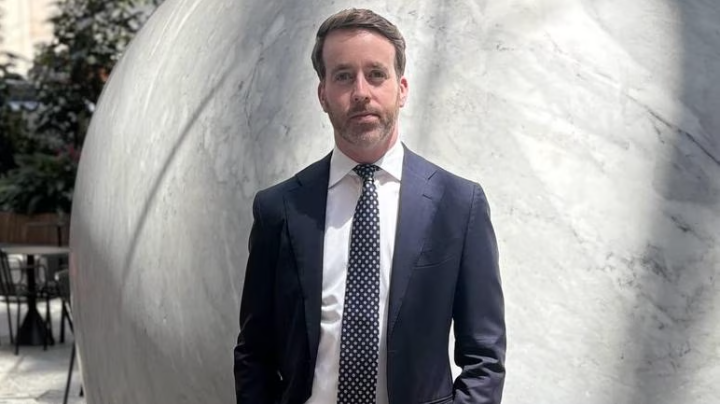 Ziller Funds Mangement’s Joseph Ziller. Picture: Scott Curtis