

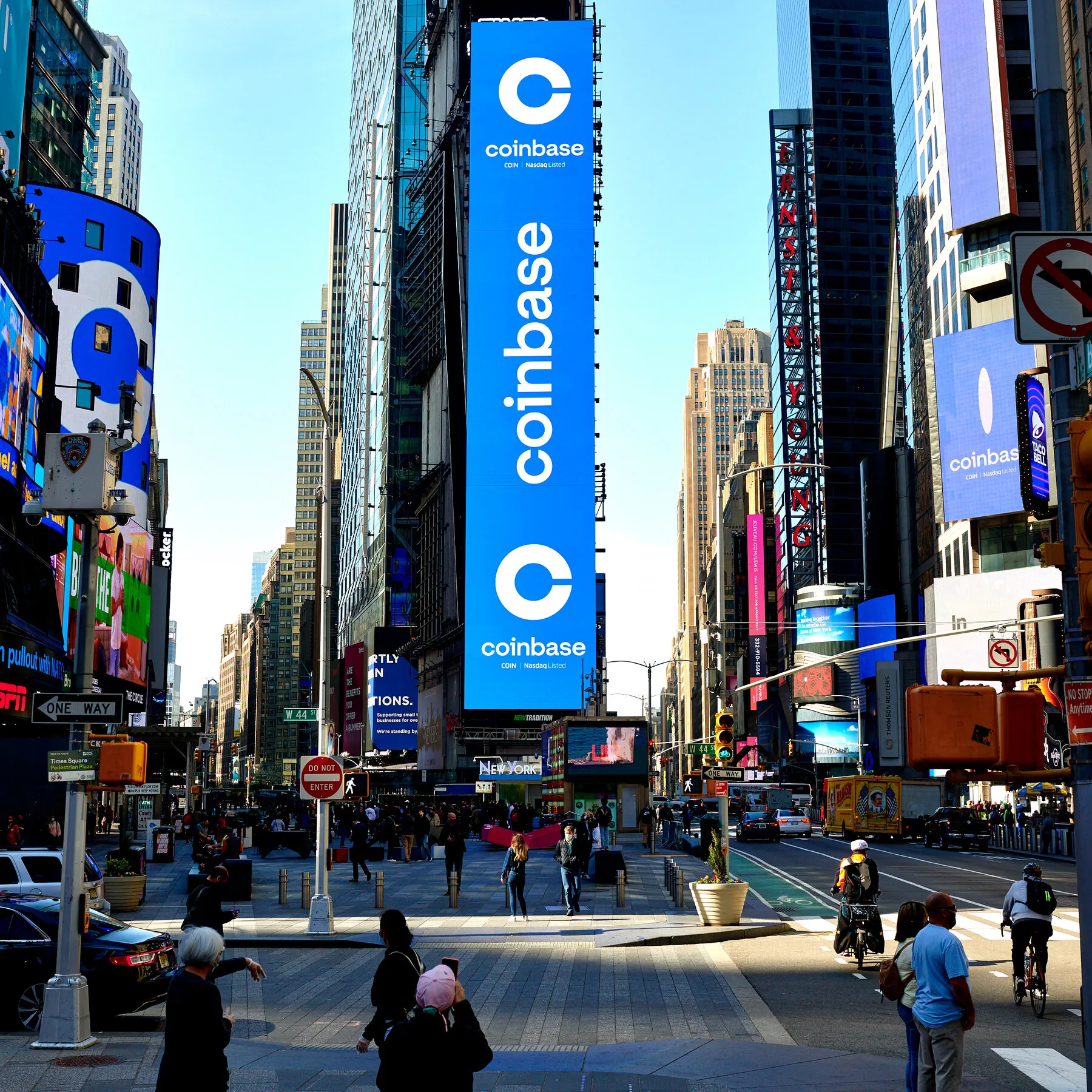
Coinbase is the leading U.S. cryptocurrency exchange and custody platform; effectively the “picks and shovels” provider of the digital-asset economy. Founded in 2012 by Brian Armstrong and Fred Ehrsam, Coinbase has become the most trusted gateway for both retail and institutional participants, serving over 120 million verified users and holding more than US $500 billion in customer assets. It dominates the U.S. retail crypto market and anchors the institutional ecosystem as custodian and execution partner for nearly all newly approved Bitcoin and Ethereum ETFs.
The Blockchain Decade
Stablecoins settled roughly US $46 trillion in 2025, more than Visa and Mastercard combined across a broader range of financial activity. At the same time, regulatory clarity in the U.S. (stablecoin GENIUS Act and CFTC comprehensive proposal) and Europe is unlocking institutional participation, with asset managers, banks, and fintechs seeking compliant partners. Particularly in the U.S., the White House has launched a coordinated push to position the nation as “the Crypto Capital of the World.”
Arms Strong
Armstrong’s philosophy “an open financial system for the world” has guided Coinbase from exchange to full-stack infrastructure provider. A self-described “product-focused CEO,” he has incessantly pursued long-range investments in compliance, custody, and developer platforms. Of the early major exchanges, nearly all failed, committed fraud, or fled offshore. This stability of vision and control has allowed Coinbase to expand into staking, stablecoins, and on-chain infrastructure without losing focus on regulatory legitimacy; the central differentiator of the franchise.
License as Moat
Coinbase is the most regulation-ready and audit-hardened platform at scale in crypto. From inception, it chose to operate transparently under U.S. and global financial regulations. This compliance-first DNA has now become a durable advantage as regulators tighten standards and many offshore or underregulated competitors retreat or unwind. Coinbase is the natural partner for institutions, ETFs and banks that require compliant infrastructure.
The ‘Amazon’ of Crypto
Coinbase is becoming more than a place to buy and sell crypto. Trading brings customers in; custody and staking keep their assets on the platform; USDC lets them move and spend money; and Base provides the infrastructure layer for a growing ecosystem of on-chain apps and financial activity. This means Coinbase can earn from the same customer in several ways. It makes money from trading and custody, whilst earning interest income through USDC.

Source: CoinGecko
How do AI Pay?
AI agents will increasingly need to pay for data, software and computing from one another. Many of these purchases could be fractions of a cent and occur thousands or millions of times automatically. Traditional card rails, with minimum fees, intermediaries and human accounts, are poorly suited to this kind of activity. Coinbase already has much of the infrastructure ready – USDC provides the money, Base moves it cheaply, and x402 lets AI agents pay businesses automatically over the internet. With x402 already processing more than 50 million transactions, Coinbase is becoming an important payment rail for the emerging machine economy, much as card networks enabled internet commerce.
Financials
Since listing, Coinbase’s revenue has grown ~59% annually. We model ~29% annual growth through FY31 as Coinbase expands beyond trading into the broader infrastructure of the on-chain economy: institutional custody and prime services, stablecoins and payments, staking, Base, and developer infrastructure. We forecast EBIT margins to expand from 22% toward ~34% by FY31 driven by software-like scalability, fewer intermediaries than in traditional brokerage, and a higher fee base (~30 bps vs 3 bps for equities).
Valuation
At current valuation levels (~35 forward P/E), Coinbase offers an attractive exposure to the most trusted operating system for the on-chain economy. Our Total Rate of Return estimate for the company is >20% pa over the next 5 years.